+91 904 885 7777
 Back to blogs
Senior Living v/s Traditional Living: What’s the Difference?
For many people, the home they live in during their working years is simply where life happens. It is where families grow, routines unfold, and responsibilities are managed. But as people move into their fifties and beyond, the way they look at their living environment often begins to change.
18 Mar 2026 |Blogs

A question that naturally comes up is: Is traditional living still the best choice, or does senior living
offer something different?
To understand the difference, it helps to look at how each lifestyle is designed.
Traditional living usually means staying in the same home or neighbourhood for many years. While
this brings familiarity and emotional connection, these homes are rarely built with ageing in mind.
Maintenance tasks can become tiring over time, large spaces may feel unnecessary, and safety features
are often limited. Even simple things like stairs, uneven flooring, or distant healthcare facilities can
slowly turn into everyday challenges.
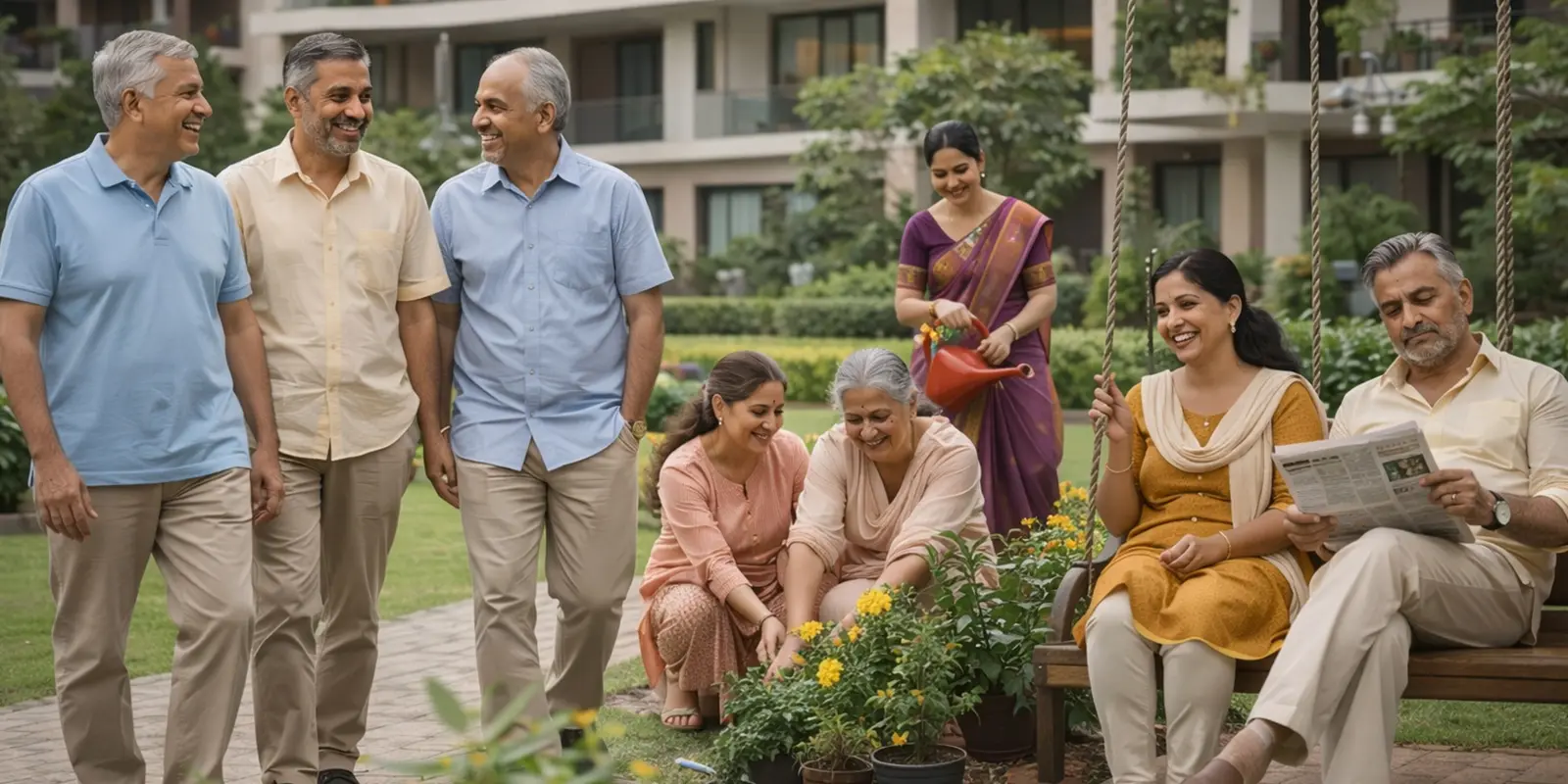
Senior living communities, on the other hand, are designed specifically to support life after fifty. The
focus is not just on housing, but on creating an environment where residents can continue living
independently while enjoying comfort, safety, and social connection.
One noticeable difference is convenience. In traditional homes, daily responsibilities such as
maintenance, repairs, and security are managed individually. In senior living communities, many of
these concerns are handled within the community, allowing residents to spend more time enjoying
their day rather than managing their homes.
Another important difference is the sense of community. Traditional neighbourhoods can sometimes
feel quiet or isolated, especially once children move away and social circles change. Senior living
environments often bring together people at similar life stages, creating opportunities for meaningful
conversations, shared activities, and friendships.
Safety is also a key factor. Senior living communities are usually designed with features that support
accessibility and mobility, helping residents move around comfortably and confidently.
Perhaps the biggest difference lies in lifestyle. Traditional living focuses mainly on the home itself,
while senior living focuses on the overall experience of living — including wellness, relaxation, and
community engagement.
For many adults today, senior living is not about giving up independence. Instead, it is about choosing
an environment that supports a healthier, more comfortable, and more connected way of life.
Varma Wellage reflects this evolving idea of senior living. Designed as a wellness-focused community
for adults aged 50 and above, it offers a balanced lifestyle where independent living, safety, and well-
being come together.
Frequently Asked Questions
1.What is the difference between senior living and traditional living?
Traditional living usually means staying in a regular home or neighbourhood. Senior living
communities are designed specifically for adults aged 50 and above, offering accessible homes, safety
features, and community-focused amenities.
2.Is senior living the same as assisted living?
No. Senior living communities often support independent lifestyles. Residents live in their own homes
while enjoying community facilities and supportive services.
3.Why do people choose senior living communities?
Many people choose senior living for convenience, safety, social interaction, and homes designed to
support comfortable ageing.
4.At what age should someone consider senior living?
Many people begin exploring senior living options after the age of 50, when they start planning for a
lifestyle that supports long-term well-being.
Thinking about a lifestyle designed for comfort and connection?
Discover Varma Wellage, where thoughtfully designed homes and a wellness-focused environment
create a new way of experiencing life after fifty.